
The Milan Local Division of the UPC clarifies the requirements to grant preservation of evidence measures
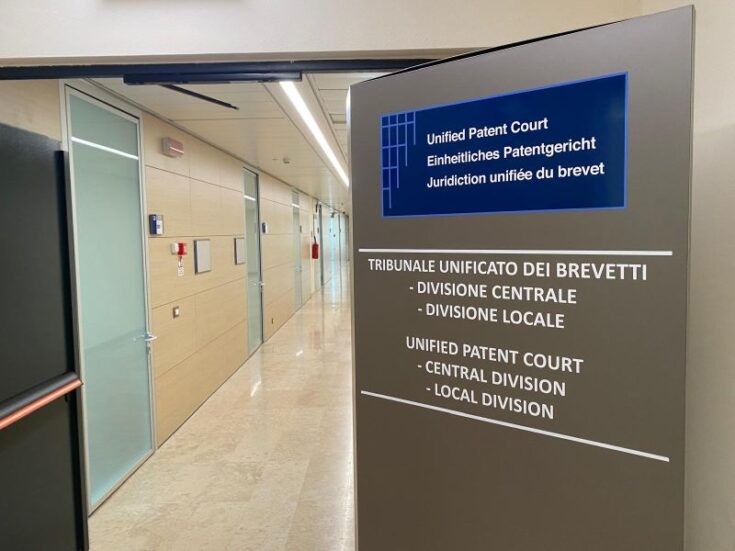
With two recent orders, the Milan Local Division of the Unified Patent Court (UPC), which has already been in the spotlight in Europe for its pragmatic approach to preliminary orders, has clarified some important aspects concerning the grant of provisional measures for collecting evidence provided for in the UPC system (equivalent to the Italian search orders or the saisie available in France and Belgium).
Specifically, the Local Division upheld the orders for preservation of evidence previously issued in the cases Prinoth v. Xelom (decision of 27 October 2025, Judge Zana) and 3V Sigma v. ACEF (decision of 5 December 2025, Presiding Judge Perrotti). In both cases, the defendant companies against which a preservation of evidenceorder had been issued and enforced ex parte had requested a review of the order.
First and foremost, these decisions clarify the evidentiary threshold required for obtaining an order to preserve evidence. The Milan Local Division confirms that it is not necessary for the applicant to present definitive proof that the patent has been infringed, as only “sufficient evidence” is required to establish the logical and factual consistency of the claims, based on a credible and adequately supported assessment, conducted at the time of filing the request. The evidence offered by the applicant must also be “reasonably available”, i.e. under the direct control of the applicant, so that its acquisition does not require unreasonable effort.
The Milan Local Division also explicitly clarifies – as is already undisputed in national case law, including Italian case law – that (1) the substantive assessment of the alleged infringement of the patent asserted is left to the subsequent proceedings on the merits, following inter partes discussion, where the defendant will be able to fully develop its defensive arguments, and not to the (preliminary) phase, which is only devoted to granting evidentiary protection, and (2) the Court must not investigate the validity of the patent, which is necessary only when the patent holder requests a PI order that, both in preliminary proceedings as well as in proceedings on the merits, affects the substantive rights of the defendant.
Another relevant aspect concerns the urgency requirement. Unlike in case of provisional measures – for which the UPC Agreement and the Rulesof Procedure require an assessment of any “unreasonable delay” on the part of the applicant in taking action to protect its rights – the Local Division downplays the relevance of this requirement in the context of preservation of evidencemeasures: their function, which is only collecting evidence and does not correspond to that of provisional measures, does not require proof of urgency per se. Rather, the applicant should prove, on the one hand, the necessity of the measures requested for the purpose of collecting evidence of infringement, which would not otherwise be available, and, on the other hand, the existence of an actual – albeit not certain – risk of destruction of the evidence itself.
The case law of the Milan Local Division is therefore at the forefront as regards provisional measures in the UPC system. Through a pragmatic use of all the tools provided by the new system, the Italian-based Local Division – thanks in part to the previous national experience of its judges – contributes to the development of European best practices on an issue that is essential for ensuring effective protection of patent holders’ rights, without neglecting the principles of proportionality and procedural guarantees for the defendants.